The current locations of the Pickens County Head Start program and the Dream Center (111 Hillcrest Drive) were once the site of the Simpson School and Clearview High School, two Jim Crow era schools for African Americans in Easley. The land adjacent to the Dream...

News
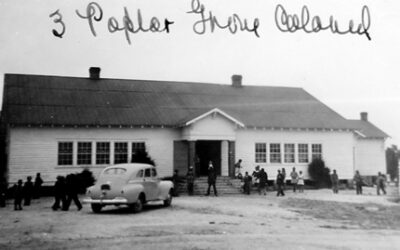
Poplar Grove School
Poplar Grove Elementary School was one of 17 African American schools built between 1918-1930 in Union County. Poplar Grove Elementary School was originally a four-room school house. An additional room was added in 1941. That added room still stands as a private...
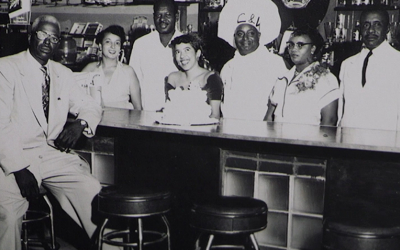
Charlie’s Place
Charlie and Sarah Fitzgerald opened Charlie’s Place as a supper club in 1937. It was a stop on the “Chitlin’ Circuit,” nightclubs where black entertainers such as Billie Holiday, the Mills Brothers, Little Richard, Ruth Brown, Otis Redding, and The Drifters performed...
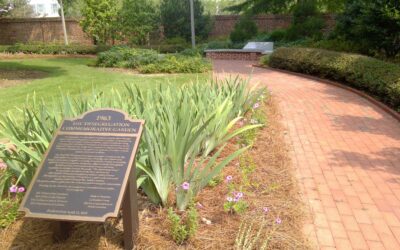
1963 USC Desegregation Commemorative Garden
On September 11, 1963, Robert Anderson, Henrie Montieth, and James Solomon became the first African American students to enroll at the University of South Carolina since Reconstruction. The 1963 USC Desegregation Commemorative Garden marks the 50th anniversary of the...
Simeon Pinckney Homestead
Born a slave in Manning, Simeon Pinckney enlisted in the 3rd S.C. Infantry (Colored) in 1863. He also served in the 21st U.S. Colored Infantry. After the war, Pinckney, his wife Isabella, and their three children settled on James Island. In 1874 he purchased twenty...
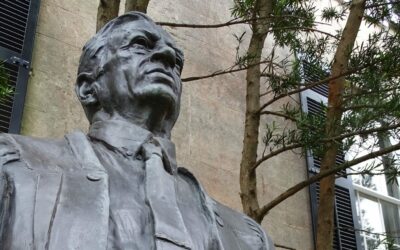
Judge J. Waties Waring Statue
The Honorable Julius Waties Waring became a federal judge in 1942. Waring, an eighth generation Charlestonian and son of a Confederate veteran, made a number of important rulings that confounded his contemporaries and advanced the civil rights aspirations of African...
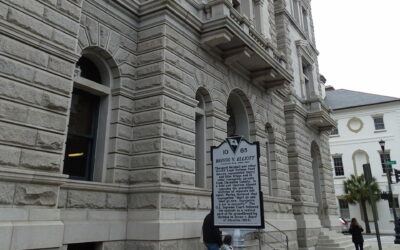
United States Courthouse and Post Office: Briggs v. Elliott Historical Marker
This Renaissance Revival building, opened in 1896, is notable for its association with U.S. District Judge J. Waties Waring (1880-1968). Waring, a Charleston native who served here 1942 to 1952, issued some of the most important civil rights rulings of the era. ...
Richard T. Greener Statue
This statue is dedicated to the memory of Richard Theodore Greener (1844-1922), a professor of philosophy, scholar, librarian, and law graduate of the Reconstruction-era University of South Carolina. Born in Philadelphia and raised in Boston, Greener attended...
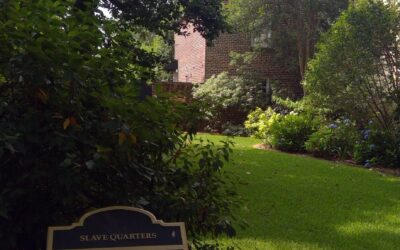
Slave Quarters at South Carolina College
The last remaining kitchen and slave quarters on campus stands as a tangible link to the enslaved people who lived and worked here. South Carolina College, a forerunner to the modern university, owned a number of slaves and hired countless others between 1801 and...
Historic Downtown African American Business District (Florence, SC)
The 200 and 300 blocks of N. Dargan St. were once the center of a thriving African American business district in Florence. A number of black-owned businesses operated here, including restaurants, barber shops, funeral parlors and pharmacies. These businesses provided...
Philip Simmons House and Workshop
Born on a barrier island in 1912, Philip Simmons became an apprentice blacksmith at the age of 13. Simmons created many of Charleston's finest 20th century wrought iron gates, fences, balconies, window grilles, and other decorative pieces. Local businessman Jack...
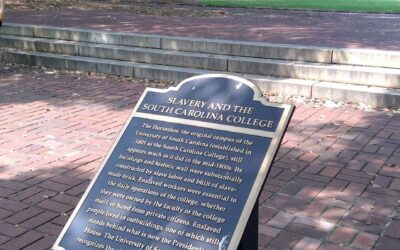
Slavery and the South Carolina College
The Horseshoe, the original campus of the University of South Carolina (established in 1801 as the South Carolina College), still appears much as it did in the mid-1800s. Its buildings and historic wall were substantially constructed by slave labor and built of...
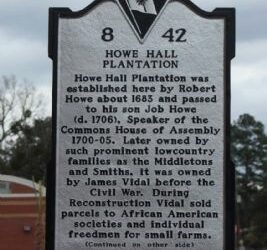
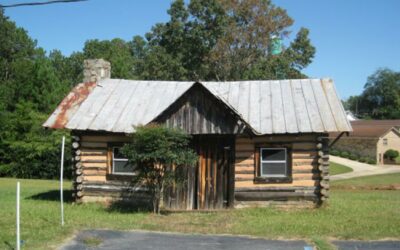
Howe Hall Plantation
Robert Howe established an inland rice plantation after moving to S.C. in 1683. Howe Plantation was later owned by several prominent lowcountry families. James Vidal owned the home prior to the Civil War. During Reconstruction Vidal sold parcels to African American...
Seneca Institute / Seneca Junior College
Seneca Institute (1899-1939) began as one three-room building. The Institute educated primary and secondary African American children until 1930 when it became Seneca Junior College and offered post-secondary education to African Americans from across the country. Its...