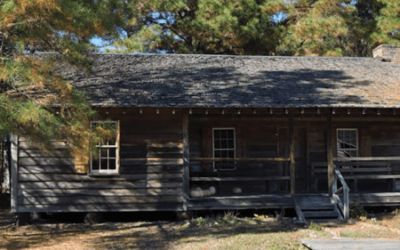
Built in 1926, Bell Street School was the second school for African Americans on this site. The original was Friendship School, founded in 1883 by nearby Friendship AME Church. In 1937, Bell Street School became the first black high school in Laurens County to be...
News
Berean Church / J.I. Washington Branch Library
The Berean Presbyterian Church was constructed c. 1900 and was used as an African American Presbyterian Church until at least 1924. The building was purchased from the synod and became the library for the county’s African American residents from 1932 to 1965. The...
Avery Institute
Avery Institute originated in the Saxton School, which was founded by Francis L. Cardoza in 1865 as a school for African American students. Cardoza’s request to the American Missionary Association for a secondary school resulted in the purchase of a Bull Street lot...
Allison Creek Presbyterian Church / African American Graveyard
This church was founded in 1854 by residents of the Clay Hill community on Allison Creek, who were members of Bethel (1769) and Ebenezer (c. 1785) Presbyterian churches. They built this church soon afterwards, on land donated by J.D. Currence. Rev. J.R. Baird, the...
Alston House
Built around 1875, this one-story Greek Revival cottage was used as a residence and business in the late 19th century by Carolina Alston, an African American businesswoman. Alston acquired the property in 1888, but might have leased it earlier. She operated a dry...
Afro American Insurance Company
This company, with offices in several Southeastern states, was one of several insurance companies owned and operated by African Americans. The Rock Hill building c.1909 was evidence of the growing market for business and professional services for the emerging African...
15th N.Y. Infantry / “Harlem Hell Fighters”
The 15th N.Y. Infantry, a volunteer National Guard unit of African American soldiers, arrived in Spartanburg Oct. 10, 1917, to train at Camp Wadsworth. Local whites feared racial violence like those of East St. Louis and Houston, and tensions rose for about two weeks....
Freewoods Farm
Freewoods Farm is the only African-American living farm museum in the United States. It recognizes and promotes the contributions of African American farmers to the development of agriculture in South Carolina and the nation. Situated on 40-acres of land in the...
Hermon Presbyterian Church
This church was organized in 1869 with Rev. J.A. Rainey as its first pastor and is one of the oldest institutions in Rock Hill. With support from Northern Presbyterians, it ran a private school as early as the 1880s and was a mission church until 1912. This Gothic...
Fairview Presbyterian Church & Cemetery
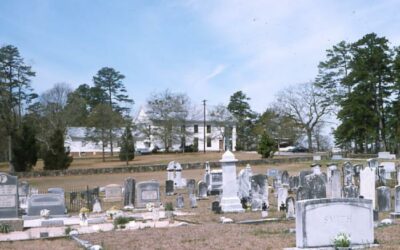
Settlers from the Nazareth area of Spartanburg County founded this Presbyterian church in 1786 on land ceded by the Cherokee Indians in the Treaty of Dewitt's Corner, 1777. It is said that three buildings, two of logs and one of brick, preceded this 1858 building. ...
Columbia Hospital “Negro Unit”/ Columbia Hospital “Negro Nurses”
Columbia Hospital, est. 1892, opened a segregated wing for African Americans in 1934 at its Hampton St. location. In 1943, it built an expanded "Negro Unit" at the NW corner of Harden and Lady Sts. This 4-story facility was designed by architects Lafaye, Lafaye, and...
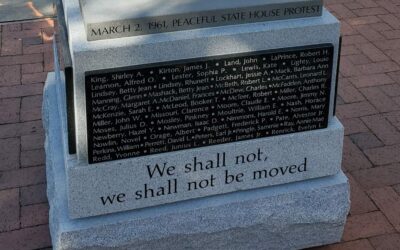
“We Shall Not Be Moved” Memorial
Artist's Statement The three large granite pillars on which the "We Shall Not Be Moved" memorial sits represents the guiding principles for which the Civil Rights Movement was fought: to end institutionalized racial discrimination, disenfranchisement, and racial...
Septima Clark Birthplace
Septima Poinsette Clark, who Martin Luther King Jr. called "the Mother of the Movement," was a nationally influential Civil Rights activist. She was born at 105 Wentworth St. on May 3, 1898 to Peter Poinsette, a former slave, and Victoria Anderson, who was of Haitian...
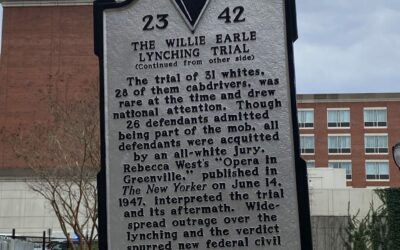
Greenville County Courthouse/The Willie Earle Lynching Trial
This Beaux Arts building, built in 1916-18, was the fourth Greenville County Courthouse, from 1918 to 1950. It was listed in the National Register of Historic Places in 1994. The largest lynching trial in U.S. history was held here May 12-21, 1947. Willie Earle, a...