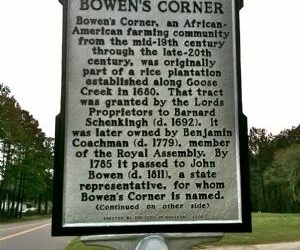
Bowen’s Corner, an African American farming community from the mid-19th century through the late-20th century, was originally part of a rice plantation established along Goose Creek in 1680. By 1785, the property was acquired by John Bowen, a state representative....
News
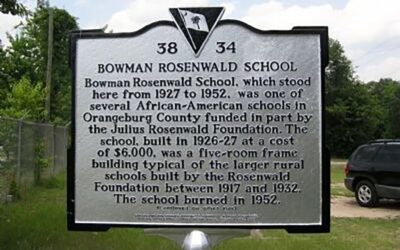
Bowman Rosenwald School
Bowman Rosenwald School, which stood here from 1927 to 1952, was one of several African American schools in Orangeburg County funded in part by the Julius Rosenwald Foundation. The five-room frame building was typical of the larger rural schools built by the Rosenwald...
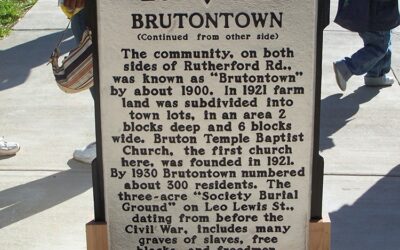
Brutontown
This is a historic African American community founded by Benjamin Bruton, a mulatto Freedman in 1874. He built a house and blacksmith shop. Others -- a few of them tradesmen like Bruton, but most tenant farmers -- soon moved to this area. By 1880 there were 60 African...
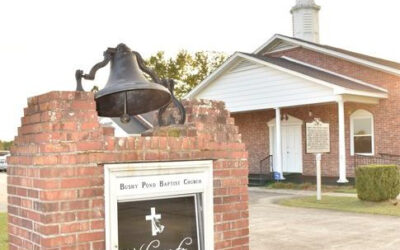
Bushy Pond Baptist Church
This church was organized during or just after the Civil War by black members of Willow Swamp Baptist Church, a combined congregation of whites and blacks before the war. In 1869-70 members received formal letters of dismissal to organize their own church. They named...
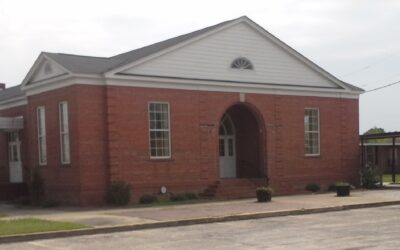
Butler School
Butler School, located on this site since 1921, was the second school to serve Hartsville’s black community. Known as the Darlington County Training School until 1939, it was renamed for Rev. Henry H. Butler, its principal from 1909 to 1946. The first building on this...
Cainhoy Historic District
The Cainhoy Historic District, while listed for its collection of buildings that date from the 18th to the 20th centuries, also derives significance from its association with black history and Reconstruction politics. During the heated gubernatorial election of 1876,...
Calvary Episcopal Church
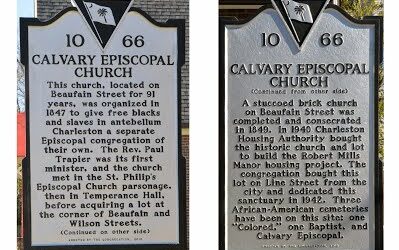
This church, located on Beaufain Street, was organized in 1847 to give free blacks and slaves in antebellum Charleston an Episcopal congregation of their own. The church acquired a lot at the corner of Beaufain and Wilson Streets where the stuccoed brick church was...
Camp of Wild’s “African Brigade,” 1863-1864
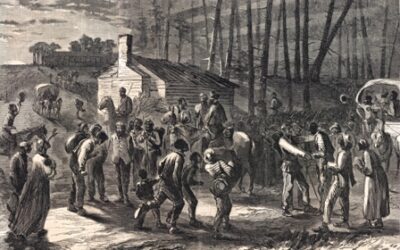
Folly Island was occupied by Union troops April 1863-February 1865. Gen. Edward A. Wild’s “African Brigade,” consisting of the 55th Massachusetts, made up largely of free blacks, and the 1st North Carolina, made up of former slaves, camped nearby from November 1863 to...
Camp Saxton
The Camp Saxton Site is nationally significant as an intact portion of the camp occupied from early November 1862 to late January 1863 by the 1st South Carolina Volunteers, the first black regiment mustered into regular service in the United States Army during the...
Camp Welfare
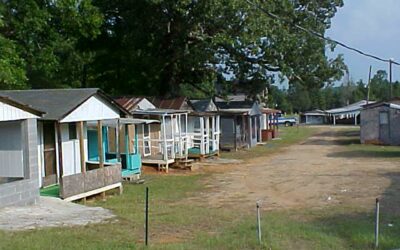
Affiliated with the African Methodist Episcopal Church, Camp Welfare has hosted an annual camp meeting, held in August, since at least 1876. The site includes some 100 simple cabins, called tents, arranged in a double U-shape. The older tents, probably constructed...
15th N.Y. Infantry : The “Harlem Hell Fighters”
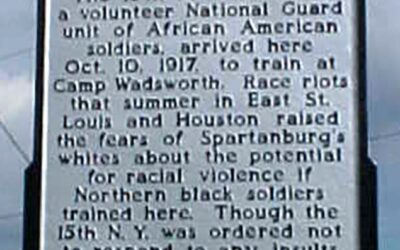
The 15th N.Y. Infantry, a volunteer National Guard unit of African American soldiers, arrived in Spartanburg Oct. 10, 1917, to train at Camp Wadsworth. Local whites feared racial violence like those of East St. Louis and Houston, and tensions rose for about two weeks....
A.P. Williams Funeral Home
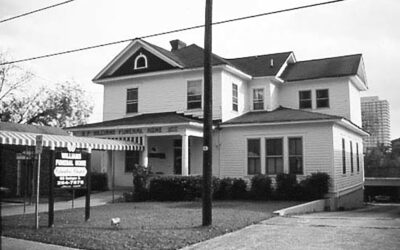
Built between 1893 and 1911, the A. P. Williams Funeral Home was a single-family residence located in the heart of the segregated Washington Street business district in Columbia. Bessie Williams Pinckney and her son, Archie Preston Williams II, converted a section of...
Afro-American Insurance Company
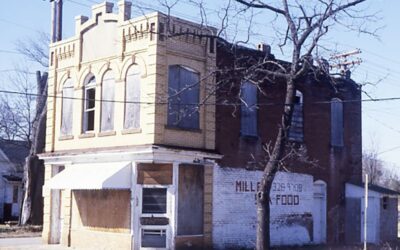
With offices in several Southeastern states, the Afro-American was one of several insurance companies that catered to black customers. The Rock Hill building, erected in 1909, is evidence of a growing need for professional services among an emerging African American...
Aiken Colored Cemetery / Pine Lawn Memorial Gardens
Established in 1852, Aiken Colored Cemetery includes the burial sites of slaves, freedmen, Reconstruction-era politicians, merchants, bankers, lawyers, physicians, ministers and educators. The Aiken County Historical Society sponsored a roadside historical marker to...