On April 1, 1960, the lunch counter at this former S.H Kress five-and-dime store was the site of the city’s first civil rights sit-in. Black students from Burke High were denied service but wouldn’t leave. They were arrested, convicted and fined. Former Woolworth’s...
News
Joseph Hayne Rainey
This National Historic Landmark was the family home of Joseph H. Rainey, the first African American elected to the US House of Representatives (1870-1879). Born in Georgetown County in 1832, it is believed Rainey made blockade-running trips during the Civil War. He...
Kress Building
This building, constructed around 1935, housed a Kress “five and dime” store with a lunch counter that served whites only. It was one of eight places in Columbia that saw student protests and sit-ins during the Civil Rights Movement of the 1960s.
John Schnierle Jr./Alonzo J. Ransier House
This house was constructed by John Schnierle, Jr. c.1849. In 1869, this became the home of Alonzo J. Ransier who served in the SC legislature 1868-1870, as SC lieutenant governor, 1872, and in Congress, 1873-1875. Born a free African American in Charleston in 1834, he...
Integration with Dignity, 1963
Clemson University became the first white college or university in the state to integrate after Reconstruction. Harvey B. Gantt, a Charleston native wanting to study architecture, applied for admission in 1961. When Clemson delayed admitting him, he sued in federal...
James Simons Elementary School / Desegregation of Charleston Schools
The school was built in 1919. In 1955 the Charleston Branch of the NAACP petitioned the school board to desegregate all public city schools. In 1960, nine parents, with support from the NAACP, applied for their children’s transfer to four white schools, including this...
I. DeQuincey Newman House
Isaiah DeQuincey Newman, Methodist minister, civil rights leader, and state senator, lived here from 1960 until his death in 1985. Born in Darlington County, he attended Claflin College and was a graduate of Clark College and Gammon Theological Seminary. Newman was a...
Harmon Field / Cannon Street All-Stars
Harmon Field was created with support from the philanthropic Harmon Foundation, 1927. State law mandated that it be segregated, it was for African Americans only until 1964. In 1953, the Cannon St. YMCA established the first black Little League in SC, it played games...
Howe Hall Plantation / Howe Hall
Robert Howe established an inland rice plantation after moving to S.C. in 1683. Howe Plantation was later owned by several prominent lowcountry families. James Vidal owned the home prior to the Civil War. During Reconstruction Vidal sold parcels to African American...
Greenfield Farm (home to Black Cowboy Rodeo Festival)
Greenfield Farm is home to the Black Cultural Enlightenment Society, which, through outdoor recreation, agriculture and equine activities, seeks to raise awareness of African American farm life. The farm hosts the Black Cowboy Festival every May.
Hewn Timber Cabin / Gregg Plantation Slave Dwellings
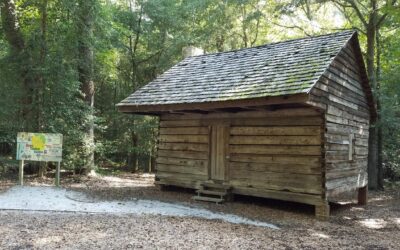
These two cabins were built c. 1836 by slaves on the cotton plantation of J. Eli Gregg in what was then Marion District. They are the last two of eight that originally stood in a cotton field in what is now the center of the campus of Francis Marion University. Built...
Friendship AME Church & Cemetery / Bell Street Schools
This church held its first services in a nearby brush arbor shortly after the Civil War and was formally organized in 1880. Trustees purchased this 3-acre lot and members and friends built a frame church here, naming their congregation Friendship AME Church. The...
Friendship School / Friendship Junior College
Friendship School was incorporated in 1906. During the 41-year tenure of President James A Goudlock, Friendship College reorganized at three levels—an elementary school (grades 1-8), a high school, and a junior college. In 1978 the school received state approval for...
Fountain Inn Principal’s House and Teacherage (combine with Fountain Inn Rosenwald School entry)
Built in 1935, this structure is the only remaining building that is historically associated with the Fountain Inn Negro School complex, comprised of the grade school built in 1928 (a Rosenwald school), a high school built in 1930, a library, and the Clayton “Peg Leg”...