The Green Book of SC

A Travel Guide to S.C. African American Cultural Sites

News

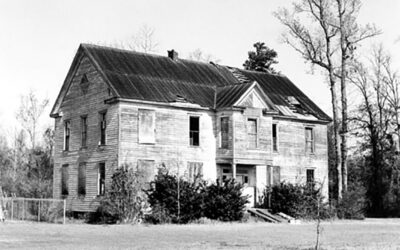
Hutchinson House

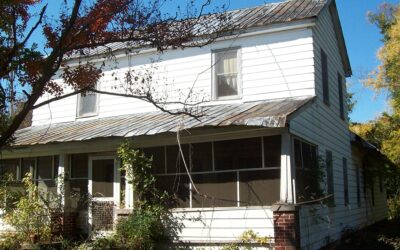
Hutchinson House

Built by Henry Hutchinson around the time of his marriage to Rosa Swinton in 1885, the Hutchinson House is the oldest intact house identified with the African American community on Edisto Island after the Civil War. Hutchinson was born enslaved in 1860, and according...
read more
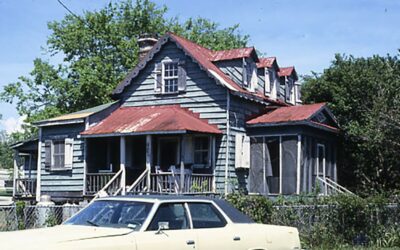
Rev. I. DeQuincey Newman House

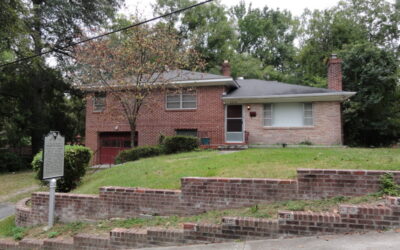
Rev. I. DeQuincey Newman House

Isaiah DeQuincey Newman, Methodist minister, civil rights leader, and state senator, lived here from 1960 until his death in 1985.  Born in Darlington County, he attended Claflin College and was a graduate of Clark College and Gammon Theological Seminary. Newman was a...

read more
Immanuel School

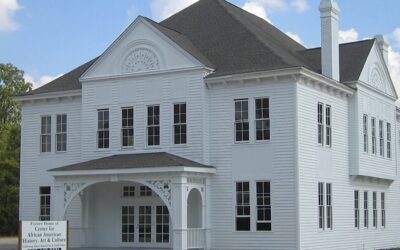
Immanuel School

The Immanuel School, built in 1889-1890, is significant for its association with the privately-funded parochial education of black children in Aiken and surrounding South Carolina counties from 1890 until it closed in 1932. In 2004, it was purchased by a group of...

read more
Jacob Bedenbaugh House

Jacob Bedenbaugh House

The Jacob Bedenbaugh House, built c. 1860, is significant in social history because of Jacob and Sarah Bedenbaugh, an interracial couple who weathered the prejudices of a society that was bent on keeping whites and blacks separate. Jacob purchased the property in 1858...

read more

James A. Bowley House

In the 1870s, this was the home of James Alfred Bowley (c.1844-1891). Born enslaved in Maryland, Bowley was the great nephew of Harriet Tubman (c.1822-1913). In 1850, Tubman and Bowley’s free father organized a plan to free Bowley and his mother and sister, making...

read more

James M. Hinton House

This is the site of the home of James Miles Hinton, businessman, civil rights pioneer and minister.  Hinton moved to Columbia in 1939 and was elected president of the Columbia branch of the NAACP.  He was president of the state conference from 1941 through 1958, as it...

read more

Gifford Rosenwald School

The first (c. 1921) of four Rosenwald schools in Hampton County, it had two to five teachers for an average of almost 200 students a year in grades 1-9 until it closed in 1958. Since then the facility has been used for church services and Sunday school classes. Marker...

read more
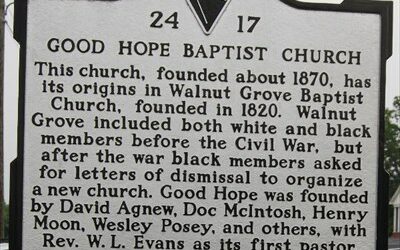
Good Hope Baptist Church

Good Hope Baptist Church

This church has its origins in Walnut Grove Baptist Church, c. 1820, which had both white and black members before the Civil War.  After the war, black members asked for letters of dismissal to organize a new church, founded around 1870 with Rev. W.L. Evans as its...

read more
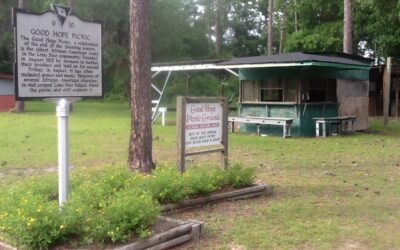
Good Hope Picnic

Good Hope Picnic

The Good Hope Picnic, a celebration of the end of the planting season, is the oldest African American event in the Lone Star community. Founded in August 1915 by farmers to market their produce and held on the second Friday in August, it has often included games and...

read more
Good Samaritan-Waverly Hospital

Good Samaritan-Waverly Hospital

Established in 1938 by the merger of two older hospitals, Good Samaritan-Waverly Hospital (GSWH) served the Black community in Columbia and surrounding counties for 35 years.  It merged Good Samaritan Hospital, founded in 1910 by Dr. William S. Rhodes and his wife,...

read more
Goodwill Parochial School

Goodwill Parochial School

This two-story wood frame building was constructed c. 1890 to replace an earlier building associated with Goodwill Parochial School. The school had been established soon after the end of the Civil War by the Committee on Freedmen of the Presbyterian Church in the...

read more

Granard Graded and High School

This is the original location of Granard Graded and High School, also known as Granard Street School. It was built here between 1905 and 1914 and included the first black high school in Gaffney. A new Granard High was built on Rutledge Avenue in 1937. The 1937 Granard...

read more