The Green Book of SC

A Travel Guide to S.C. African American Cultural Sites

News

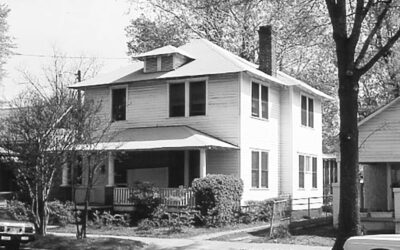
Waverly Historic District

Waverly Historic District

Waverly has been one of Columbia’s most significant black communities since the 1930s. The city’s first residential suburb, it grew out of a 60-acre parcel bought by Robert Latta in 1855. Latta’s widow and children sold the first lots here in 1863. Shortly after the...
read more
Wesley Methodist Church, Beaufort

Wesley Methodist Church, Beaufort

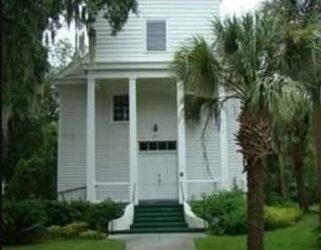
This church, established in 1833, was the first Methodist church in Beaufort and was founded as a mission to slaves and free blacks here and on the neighboring sea islands. The congregation had both black and white members but many more black members in the antebellum...

read more
West Broad Street Historic District

West Broad Street Historic District

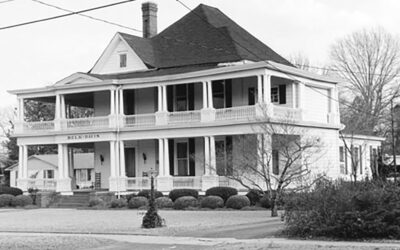
The West Broad Street Historic District is a collection of houses built between 1890 and 1928. Fourteen of them are attributed to Lawrence Reese (1864-1915), a native of Marlboro County who came to Darlington as a merchant in the 1880s. With no formal training in...

read more
Whittemore School / Whittemore High School

Whittemore School / Whittemore High School

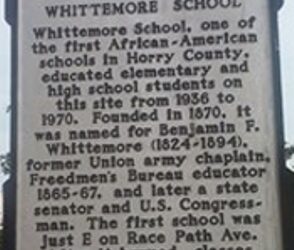
This was one of the first schools in the county for black students and operated at this site from 1936 to 1970. Founded in 1870, it was named for Benjamin F. Whittemore (1824-1894), former Union army chaplain, Freedmen’s Bureau educator 1865-67, and later a state...

read more
William H. Johnson Birthplace

William H. Johnson Birthplace

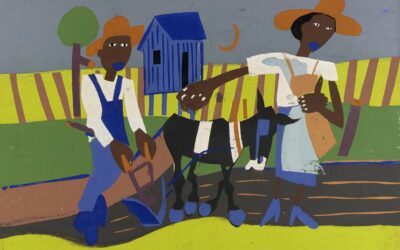
William Henry Johnson (1901-1970), an important painter of the “Harlem Renaissance,” was born a block north of here on Cox Street. In 1918, at the age of 17, Johnson moved to New York City to pursue a career in art, studying at the National Academy of Design and later...

read more
Union Community Hospital

Union Community Hospital

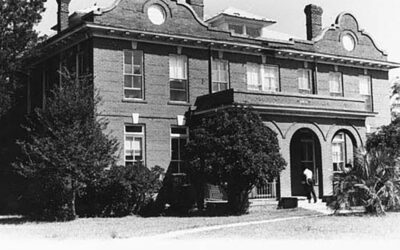
Union Community Hospital served the black community of Union County and nearby areas from 1932 to 1975. Built as a house c. 1915, it was converted into a hospital by Dr. L.W. Long in 1932 with the support of several local churches. Long (1906-1985), a native of Union...

read more
Unity Baptist Church

Unity Baptist Church

The congregation of Unity Baptist Church was organized in 1909 and originally met in the homes of members. Its congregation was an outgrowth of Kershaw’s First Baptist Church. Unity was the second separate African American church established in Kershaw in the early...

read more
Victory Savings Bank

Victory Savings Bank

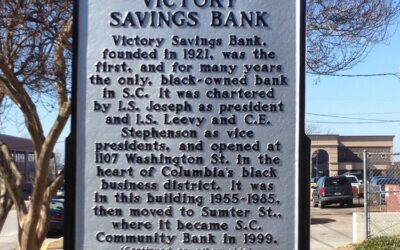
Victory Savings Bank, founded in 1921, was the first, and for many years the only, black-owned bank in S.C. It occupied a bank building at 1107 Washington St. in the heart of Columbia’s black business district from 1955 to 1985. It was moved to Sumter St., where it...

read more
Visanka-Starks House

Visanka-Starks House

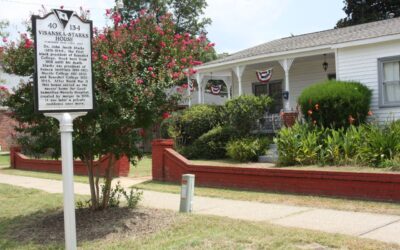
This house, built after 1900, was originally a two-story frame residence with a projecting bay and wraparound porch. A fire in 1989 destroyed the second story. Barrett Visanska (1849-1932), a jeweler, bought the house in 1913. In 1938 Dr. John J. Starks, the first...

read more
Voorhees College

Voorhees College

Voorhees College, founded by Elizabeth Evelyn Wright in 1897 as the Denmark Industrial School, was an effort to emphasize a vocational curriculum for rural African American students on the model of the Tuskegee Institute. The school, with funding from philanthropist...

read more
Training the Tuskegee Airmen

Training the Tuskegee Airmen

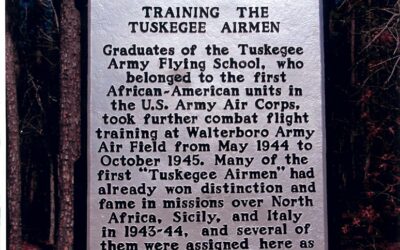
During World War II, the first African Americans in the U.S. Army Air Corps graduated from the Tuskegee Army Flying School in Alabama. From May 1944 to October 1945, some of them took further combat training here, at Walterboro Army Air Field. Several of the earliest...

read more
Treadwell Street Historic District

Treadwell Street Historic District

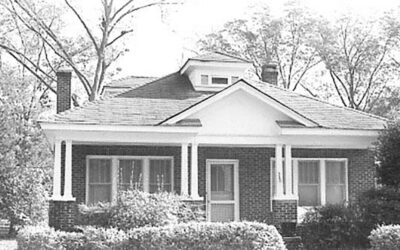
The Treadwell Street Historic District is an intact example of an early 20th century middle-class African American neighborhood. African American professionals, as well as laborers and tradesmen lived in the area, including Dr. Henry Rowe, physician, Rev. Nelson Nix,...

read more

Trinity AME Church

This church was founded soon after the Civil War by 50 Freedpeople, who held their first services in a stable donated to them by S. A. Rigby. In 1869 the church trustees bought a half-acre lot for a school and in 1870 they bought a one-acre lot for a sanctuary. The...

read more
Trinity United Methodist Church

Trinity United Methodist Church

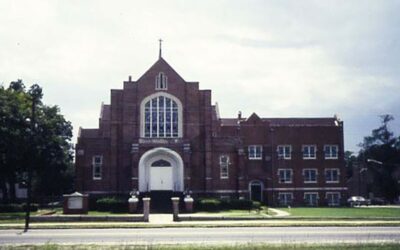
This African American church, established in 1866, built its first sanctuary four blocks SE in 1870. Construction began on this sanctuary in 1928 and was completed in 1944. Trinity, headquarters for the Orangeburg Movement during the 1960s, hosted many civil rights...

read more