The Lowcountry Trail consists of a beautiful boardwalk that crosses the hillside overlooking Mainfield, a restored rice field of the former Brookgreen Plantation. For enslaved Africans at Brookgreen, this hill was a bridge between the world of daily work and life in...
News
Sweetgrass Pavilion
The Sweetgrass Pavilion is an exceptional special event and meeting space that showcases one of the Lowcountry's largest collections of sweetgrass basket merchandise. Hands-on basket making classes are often held at the venue. The coiled sweetgrass basket is an...
Historic Downtown Beaufort and Hilton Head Island
The South Carolina African American Heritage Commission suggests the following trip itinerary through Hilton Head Island and Beaufort to enrich your vacation in South Carolina. Trips like this are outstanding, day-long excursions suitable for family reunions,...
St. Phillip School
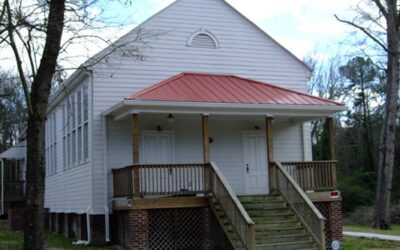
Founded by St. Phillip AME Church, a three-teacher school was built across and down the road from the church in 1938. Today, it is private property. Constructed after the Rosenwald School period, it may have been built from architectural drawings by Rudolf E. Lee, a...
Monteith School
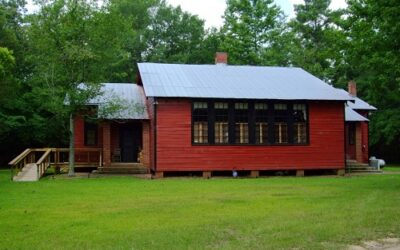
Built around 1890, the three-room schoolhouse was named New Hope School and served white students until 1914. In 1921 the Nelson School opened for black children under the direction of Rachel Hull Monteith. The school was renamed in her honor in 1932. One of her...
The Price House
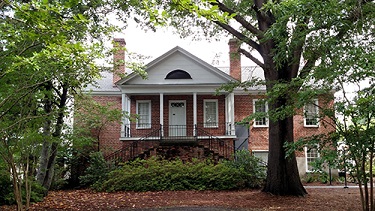
The Price House, circa 1830, is Camden's last remaining example of a combination store-residence. Named after Susan Price, an African American who purchased the building in the early 1900s, the structure is typical of the Charleston-style architecture used by many...
Soapstone Baptist Church
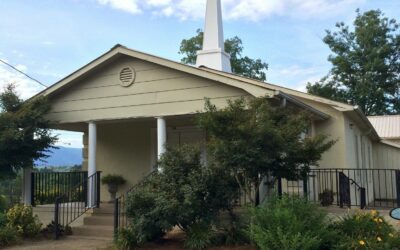
Soapstone Baptist Church is the anchor of the Liberia community, a Black freedom colony, located in Pickens County. Established after the Civil War, church members built a school to educate area children. Jim Crow threatened the community's vitality as Black...
Mount Pleasant Baptist Church at Fort Motte
The first church built by African Americans at Fort Motte grew out of services held by slaves at nearby Bellville, Goshen, Lang Syne, and Oakland plantations. It was formally organized in 1867 by Caleb Bartley, Israel Cheeseborough, Cudjo Cunningham, Anderson Keitt,...
Woodrow Wilson Family Home: A Museum of Reconstruction
The Woodrow Wilson Family Home: A Museum of Reconstruction, enjoys the dual distinction of being the nation’s only museum dedicated to interpreting the post-Civil War Reconstruction period and South Carolina’s only remaining presidential site. Through exhibit...
Slave Dwelling at Magnolia (Wavering Place Plantation)
This slave house is believed to have been built about the same time as the main house at Magnolia, an imposing Greek Revival mansion constructed c. 1855 for Frances Tucker Hopkins. She was the wealthy widow of David Thomas Hopkins, a prominent Richland County planter....
Gadsden’s Wharf
Gadsden’s Wharf is the last and most important disembarkation point for enslaved Africans in North America. Completed in 1772 by slave labor, the wharf was most active between 1783 and 1808 when an estimated 100,000 African men, women, and children arrived and were...
McLeod Plantation Historic Site
McLeod Plantation Historic Site features a plantation house and a fully intact row of extant slave dwellings. In 1860, 74 slaves lived in 26 cabins on this Sea Island cotton plantation. Five of those wood frame slave cabins remain today. During the Civil War the...
The Gulf
This area has been the center of the African American business district and a popular gathering place since the late 19th century. It has been called “the Gulf” since about 1925. Its most prominent early figure was E.J. Sawyer, Jr. (1854-1929), who was born a slave in...
Bethel AME Church, Georgetown
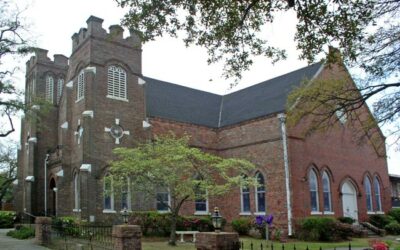
The first pastor of this c. 1865 church was Rev. Augustus Z. Carr. The present church building, constructed in 1882 of wood, is located approximately 100 feet from the original site. The brick Gothic Revival building, remodeled in 1908, features two square crenelated...